
Top Software Development Trends That Will Shape 2025
Explore the top software development trends shaping 2025, including AI-assisted development, cloud-native applications, DevSecOps, and modern coding practices.
Dr. Abdussalam Nadir
6/25/20251 min read
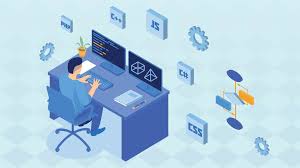
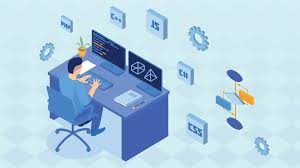
The Future of Software Development: Trends That Will Shape 2025 and Beyond
Software development has entered a new era. With rapid technological advancements, changing user expectations, and the rise of automation, businesses are now demanding faster, more secure, and more efficient digital solutions. As we move into 2025, several trends are reshaping how software is built, deployed, and maintained.
1. AI-Assisted Development Is Becoming Mainstream
Artificial Intelligence is no longer a futuristic idea—it’s already transforming the development process. AI-powered tools now help developers:
Detect bugs automatically
Generate clean and optimized code
Predict system failures
Automate testing
Provide intelligent suggestions during development
This significantly reduces development time and improves software reliability. Tools like GitHub Copilot and ChatGPT API have made coding faster and more efficient than ever.
2. Cloud-Native & Microservices Architecture
Monolithic applications are slowly disappearing. Companies now prefer microservices architecture, where applications are split into small, independent modules.
Benefits:
Faster deployment
Easy scaling
Reduced downtime
Easier maintenance
Cloud-native technologies like Kubernetes, Docker, and serverless computing are dominating the industry.
3. Low-Code & No-Code Platforms Are Transforming Businesses
Not every business wants to spend months building complex applications. Low-code/no-code platforms such as Bubble, OutSystems, and AppSheet allow teams to build functional apps with minimal coding.
These tools empower:
Startups to launch quickly
Businesses to digitize processes faster
Non-technical founders to build prototypes
4. DevSecOps: Security Is Now a Priority
Security breaches have become common, and companies have realized that security must begin at the development stage—not after deployment.
DevSecOps integrates security into every phase of development, including:
Code review
Automated security testing
Continuous monitoring
Compliance checks
This ensures safer software and reduces long-term risks.
Conclusion
The future of software development is fast, intelligent, and secure. Businesses that adopt modern development practices will be better positioned to innovate, scale, and compete globally.
Jogabai Extension, Okhla, New Delhi - 110025 - India
info@intiretech.com
© 2015–2026 Intire Technology Private Limited. All Rights Reserved.
📞 +91 – 9582872055 +91 – 9810202674
Company
Legal & Compliance
Services
Contact
Social Media Links